The Last Crate in the Freight Shed
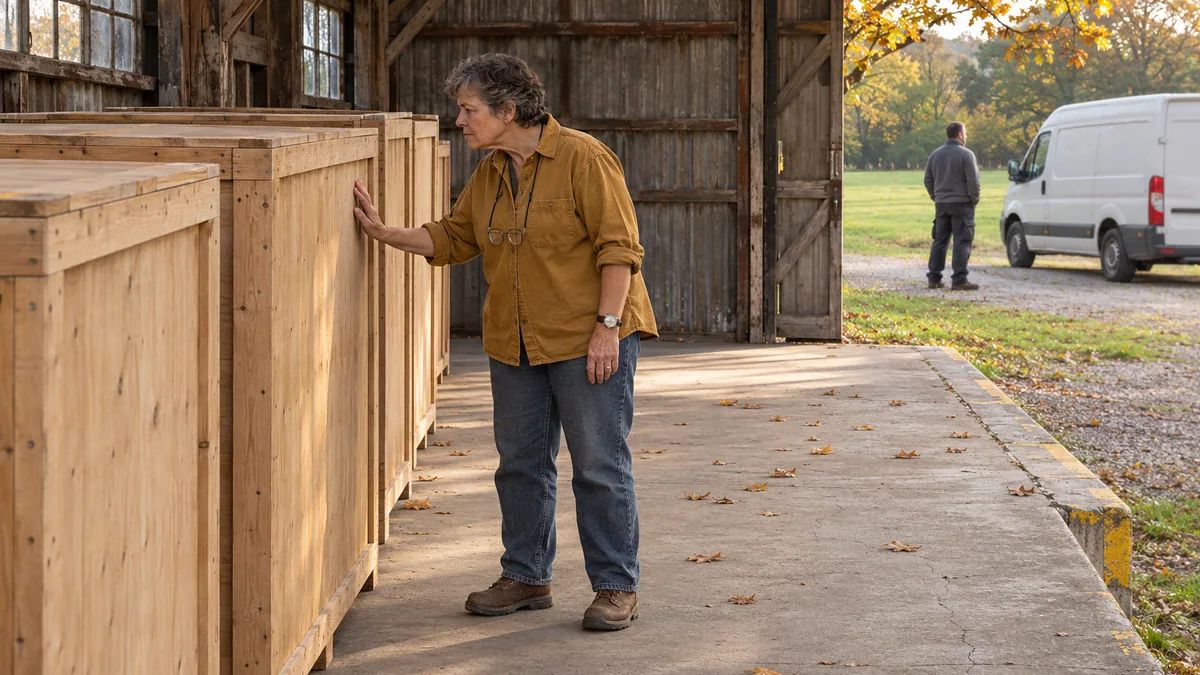
At four forty, something inside the freight shed knocked three times against the partition.
I put down my mug. The shed had been empty since lunch, except for the last consignment waiting for collection. By five, it would be somebody else’s building. My name was already peeling off the office door where I had warmed the lettering with a hair dryer.
The knock came again, lower down. Then a wooden scraping, long enough to make me look at the floor.
I called, “Hello?”
The driver outside blew his horn. He had six crates on his list and twenty minutes before the new owners wanted the yard clear. He pointed at his watch through the windscreen. I held up one finger.
There was a padlock on the partition door. I had put it there that morning after checking the numbered seals on the crates. The shed stored scenery for touring puppet companies: cloth hills, miniature buildings, painted boats. Nothing alive was supposed to come through here.
I walked around the outside wall. The high windows were dusty, the rear hatch bolted from within. I could hear a soft rhythmic thumping now, somewhere close to the partition. Wind moved the tall grass beyond the yard, but the air inside the building had been still when I locked it.
My replacement had left an hour earlier. He had asked why I kept the old paper dimensions book when the orders were all online. I had told him people were worse at describing boxes than computers were at losing things. He smiled politely and photographed the shelves.
The driver climbed down. “Ready, Elsie?”
“Not quite.”
I opened the partition door and stood to one side. The first crate had moved away from its chalk outline. Its seal was intact. Beside it, a second chalk rectangle lay empty.
There were seven crates. His paperwork said six.
The smallest one gave a hard jerk toward the loading ramp, and I shouted for the driver to stop.
He had already lowered the tail lift. Now he raised both hands, palms toward me, and stayed where he was. I backed out onto the level concrete. There was room to look properly without getting between the boxes and the ramp.
A thin cord ran under the smallest crate, around the foot of a shelf and out toward the rear hatch. Every few seconds it tightened. The box shifted, then settled back. I could see the red corner of something behind it.
I phoned the company contact on the crate labels. A woman answered over a sound of traffic. “Please tell me you’ve still got our fox.”
“I’ve got something moving.”
“Oh, no. We packed the travelling rig with its counterweight connected.” She asked me not to touch the cord. The loose board on their seventh crate had caught it when the building got warm and the board warped. They were five minutes away.
I told the driver what she had said. He sat on the edge of the loading bay and called his dispatcher. I went to the office for the dimensions book.
The seventh crate had no consignment label. It was smaller than the touring cases and built of older wood. In my book, six years earlier, was a pencilled measurement for an extra box: a little wooden puppet theatre that folded into itself. The company founder had brought it in by hand.
The woman arrived with a man carrying a tool bag. They secured the counterweight before moving anything. When they lifted the box clear, a painted fox slid a few inches along its track and bowed toward the concrete.
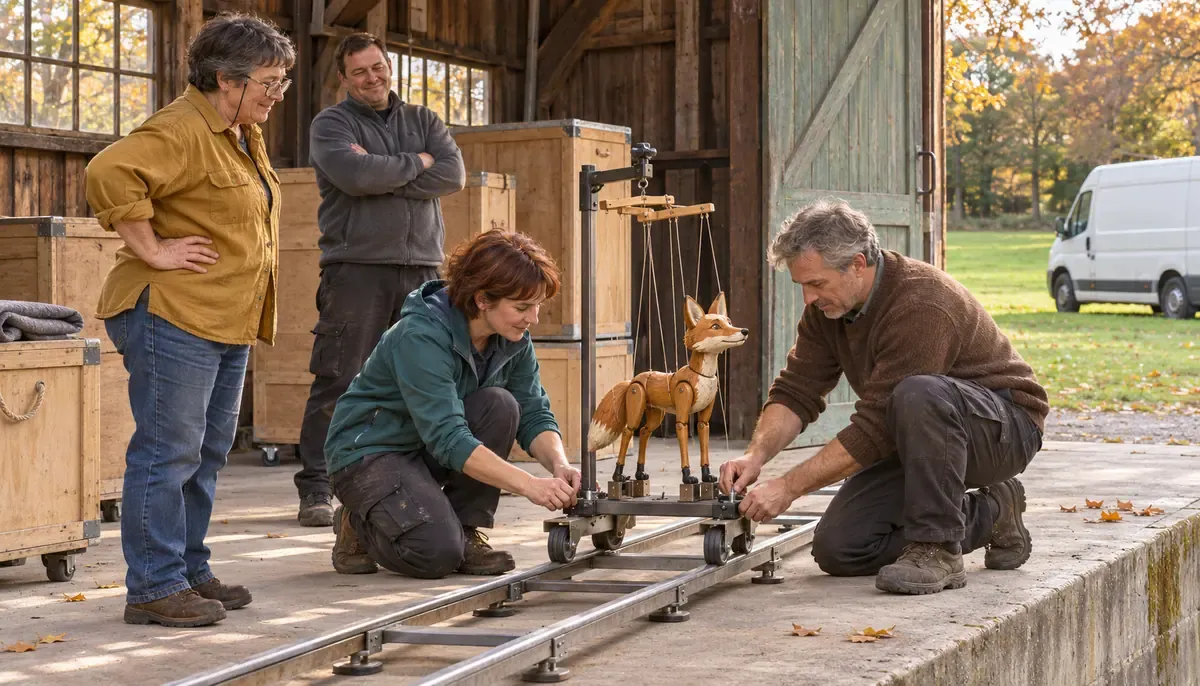
“That’s our oldest performer,” she said. “He’s been trying to leave without us.”
They checked the crate underneath. The label had fallen between two boards. It belonged on a different van, travelling to a small coastal show while the main set went inland. If we had loaded everything that looked alike, the fox would have travelled two hundred miles in the wrong direction.
The driver amended his list. The woman called the second van. While we waited, she asked about the book under my arm.
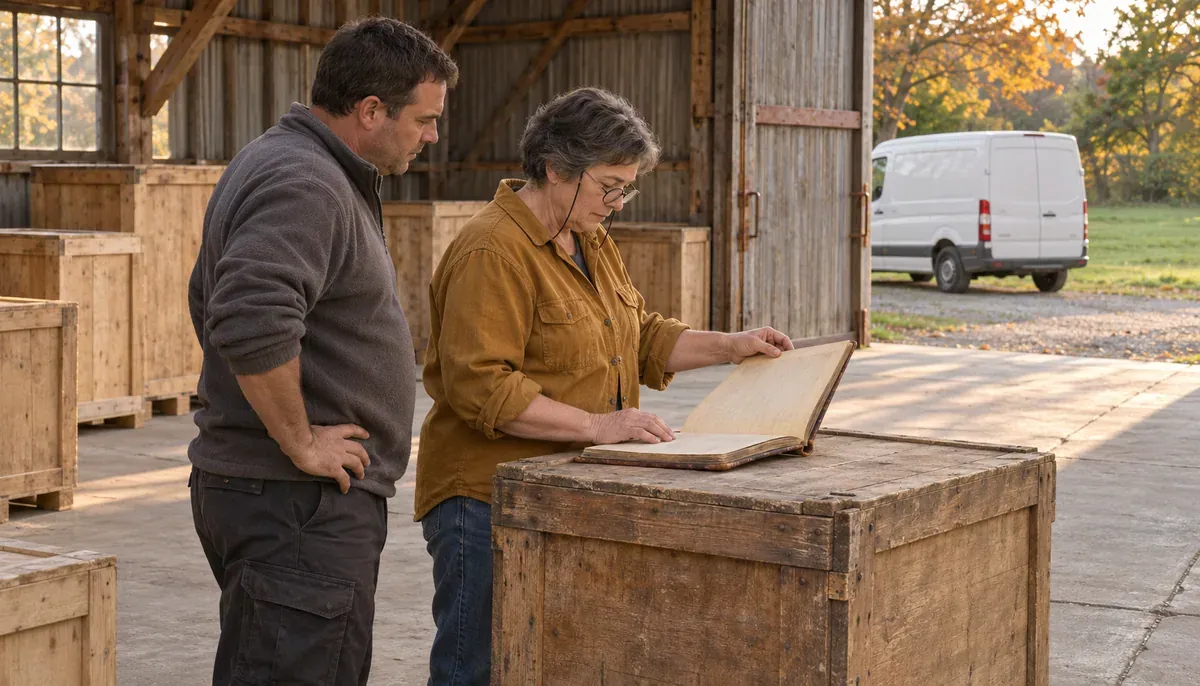
I showed her the old measurements. Beside the extra box, in my own writing, I had added, “Handle at right end. Keep upright. Fox inside.” I remembered the founder dictating it, then leaning over to make sure I had written the fox down.
My replacement answered on the third ring. I asked him to come back for ten minutes. He sounded worried until I said there was nothing broken.
When he arrived, the driver was drinking my last teabag. The little fox stood safely on the loading bay, nose tilted upward. I opened the dimensions book on the desk my replacement would use on Monday.
He pulled up a chair before I had to ask.




Comments
Be the first to share your thoughts.