Pick a Picnic Basket and See What It Says About You
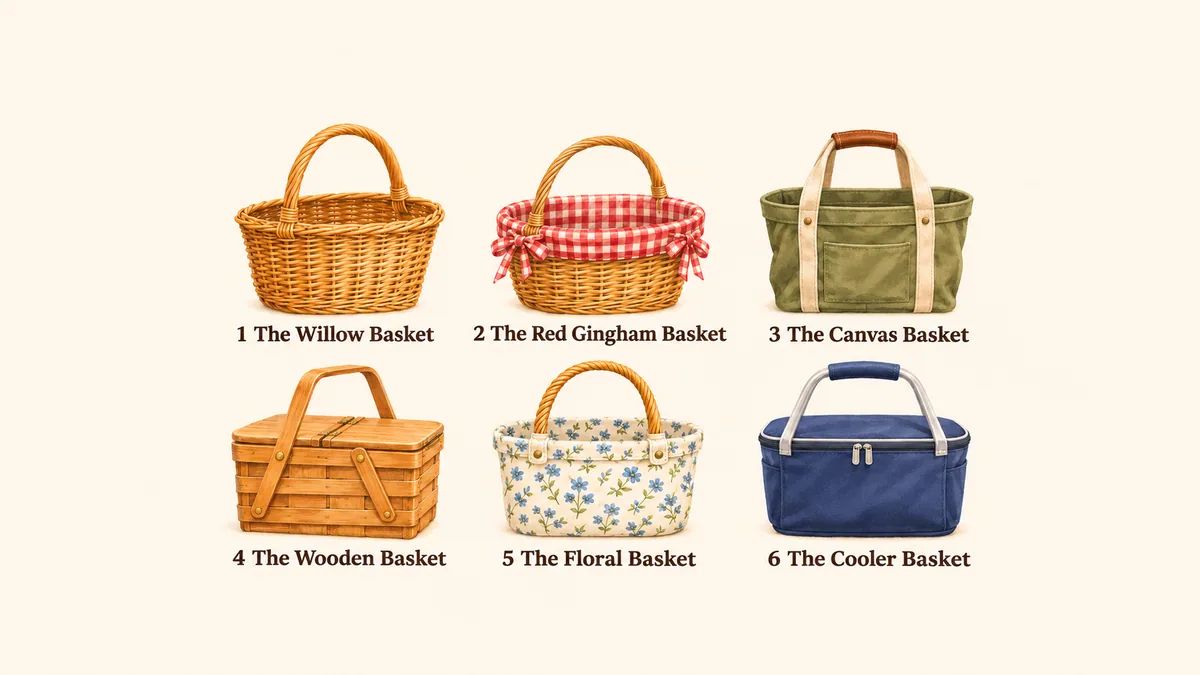
Pick one of the six numbered picnic baskets you’d carry out for an afternoon. Remember your number, then find your result below.
Imagine the food is already packed and somebody else has checked the weather. There is no prize for choosing the most practical basket, and you don’t have to explain why one appeals to you. Perhaps you like its colour, its shape, or the sort of afternoon it suggests. Choose before reading the results. These are little invitations to recognize a habit, rather than rules about who you are.
1. The Willow Basket
You make good use of what has already proved itself. If a friend asks where to meet, you remember the café where everyone could hear each other and nobody had to hurry. You aren’t obliged to invent a new occasion every time you want to see someone. Your steadiness can make an invitation feel easy to accept, especially for the friend who has had an unpredictable week.
Sometimes you return to a familiar plan before asking whether it still suits you. The place you loved five years ago might now be too noisy, or the walk might feel short rather than comfortably manageable. Try changing one part of a favourite afternoon. You can keep the company and find a different patch of grass. The useful part of a tradition is the pleasure it gives the people taking part, including you. It can survive a different route home.
2. The Red Gingham Basket
You notice the little signals that tell someone an occasion has begun. You spread the cloth before putting down the plates, and remember to take the photograph while everybody is still in it. A birthday can feel like a birthday because you remembered the candles. You often give a group something to gather around before anyone has quite worked out what to do with their hands.
You may also feel personally responsible when the mood doesn’t arrive on schedule. Somebody is quiet, the sandwiches get squashed, and you start offering alternatives before you’ve had your own lunch. Let the first few minutes be untidy. A person sitting quietly may be enjoying themselves without announcing it. Sit down, open what you brought, and give the others a chance to find the afternoon in their own way. You are allowed to be one of the guests at something you arranged.
3. The Canvas Basket
You tend to leave room for a useful extra. If somebody turns up with a dog, a child, or a bag that needs carrying, you can usually adjust without making a speech about it. Friends may know you as the person who can move the plan from the park to the kitchen and still make it feel like the same invitation. You care more about getting together than keeping the arrangement pristine.
That flexibility can make your own preference almost invisible. You agree to walk farther, eat later, or give up the comfortable seat, then wonder why you feel tired on the journey home. Say one thing you would like before the adjusting begins. It might be as small as wanting to sit in the shade. People who appreciate your easy company can usually manage a small change for you, particularly when they know what would help.
4. The Wooden Basket
You enjoy an arrangement that makes sense in your hands. You check that the lid closes, put the heavy things at the bottom, and bring a knife that actually cuts the bread. A friend who has forgotten the practical side of an outing often feels calmer when you arrive. You have a way of making the next step obvious without needing everybody to stop and discuss it.
Now and then, you can keep improving an arrangement after it is doing its job. You reorganize the bags while someone is trying to tell you something, or carry everything yourself because explaining the system seems slower. Give somebody one whole task and let them finish it their way. The fruit may end up beside the cups. If it arrives in one piece, you can sit down a little sooner and hear the story you came to hear.
5. The Floral Basket
You are drawn to an afternoon that has a little personal character. You might bring the plates you found at a jumble sale or remember the flowers growing beside the path. You don’t need a perfect view to find something worth looking at. People who spend time with you may go home remembering a colour, a joke, or a detail they would have walked past by themselves.
Your eye can also keep you searching when an ordinary choice would be enough. You wait for exactly the right present or a message that sounds exactly like you, and then time gets short. Let a simple version go out into the world. A friend is unlikely to weigh the wrapping as heavily as the fact that you remembered. The things you notice will still find their way into the afternoon, even when you use the plain plates and send the first kind sentence you wrote.
6. The Cooler Basket
You like being able to relax because one important thing has been taken care of. You check the route, remember the water, and notice when the group ought to stop for a rest. Your preparation tends to be most welcome when it is quiet: you have what is needed without reminding anyone who thought of it. A complicated day can become much more comfortable in your company.
You might find it harder to enjoy an outing while a few details remain uncertain. You check the forecast again or imagine how awkward it would be if the last bus were full. Decide which question actually needs an answer before you leave. Once you’ve handled that, let a smaller uncertainty come along. Someone may know another route, or the unexpected stop may be pleasant. You don’t have to predict the whole afternoon to have brought enough for it.
Share your pick and tell us which detail felt familiar to you.
Just for fun. This quiz isn’t a psychological test.





Comments
Be the first to share your thoughts.