The Chair Looked Worse Without Its Cover
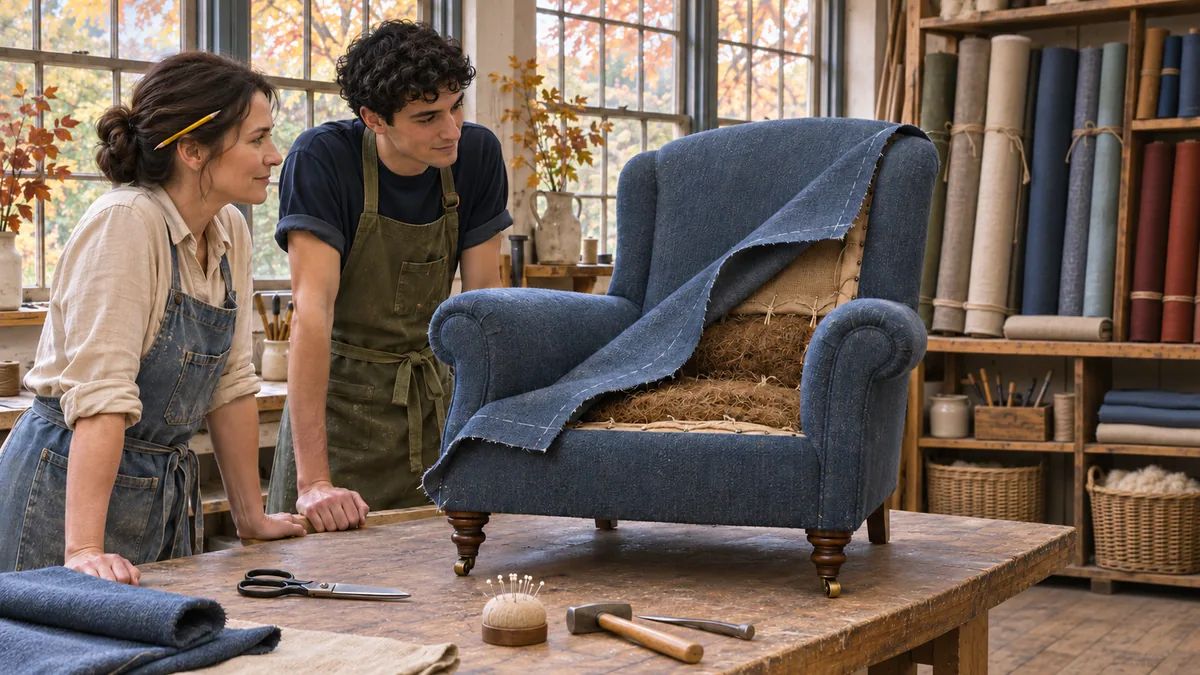
On Friday morning, my apprentice cut the new cover off the chair I had promised to deliver at noon.
It was a handsome cover. Blue wool, the colour of deep water, with piping that had taken me most of Thursday. Through the workshop window I could see the customer’s van already waiting across the road. She was early. Milo was holding my best shears.
“I can explain,” he said.
“You could have explained before cutting.”
The chair had belonged to the customer’s father. She wanted it ready for her brother’s visit. I had said noon because I liked being the person who could make that happen. I had squeezed it between a restaurant order and six dining seats, then stayed late to finish it myself.
Milo had been with me three months. He was good with wood and slow with fabric. He measured twice, wrote both measurements down, then asked which one I wanted. I used to find it reassuring. That week it had begun to feel like a personal delay.
He put the shears on the bench, blades closed. “Sit in it.”
“I did yesterday.”
“For how long?”
Long enough to see that the cushion was level. Long enough to admire the piping. I remembered sitting forward, already looking for my phone because the customer had sent another message about collection.
Milo folded the sliced wool back carefully. Underneath, the old stuffing bulged over a wooden crosspiece. There was a dark polished patch on the wood. He had marked the position with a loose length of yellow thread.
I told him old chairs looked ugly inside. That was why people brought them to us.
“I know,” he said. “I’m asking you to sit where he sat.”
He held out the customer’s photograph. Her father was in the chair, one foot tucked under him, his right elbow on the arm. I had used it to match the colour. Milo turned it over. There was another photograph on the back.
The father was reading to a little boy. They were both in the chair. The boy was fitted into the corner where the wooden crosspiece pushed hardest against the padding.
“She wants to sit with her grandson,” Milo said. “She told me when she dropped it off.”
The van door closed across the road. The customer started toward the workshop, carrying a small knitted blanket. I could either explain why the chair looked ruined or let her take it home exactly as I’d made it.
I unlocked the door before she knocked.
Her name was Mrs. Baird. She looked at the blue wool folded open, then at Milo. He went pink. I said, “We’ve found something I should have found earlier.”
I showed her the crosspiece. She touched the polished patch with her thumb. “Dad always put a folded towel there. I thought that was to protect the material.”
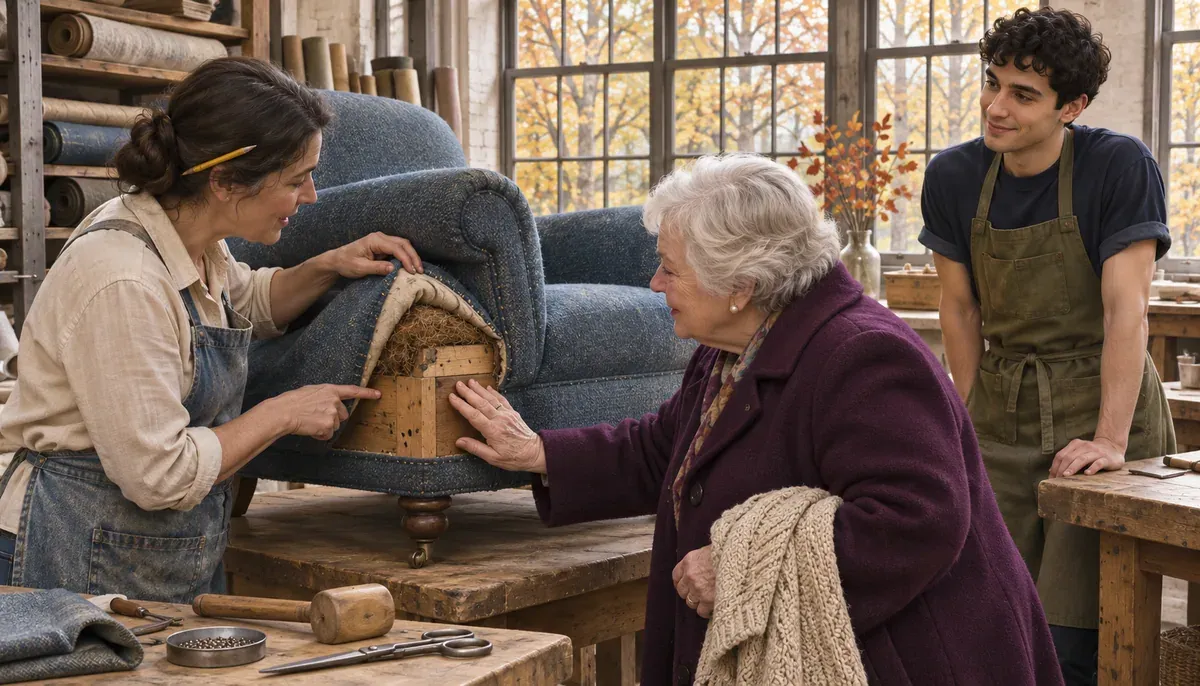
We tried the chair together. She sat with the blanket on her lap while I knelt beside it. The corner was hard even through what remained of the stuffing. It would have felt much worse with a child’s weight against her side.
“I’ve arranged lunch,” she said. “My brother’s only here for the day.”
I wanted to say I could fix it in an hour. The words were ready. Then I looked at Milo, who had already laid a new piece of padding on the bench but hadn’t cut it.
“I can lend you the wide armchair from the front,” I said. “And bring this one tomorrow. If that works for you.”
She considered it. Then she asked whether the loan chair would fit through her doorway. We measured. Milo wrote the numbers on a scrap of card and gave it to her.
After she left, I picked up the cut cover. There was enough wool to make the panel again. Enough time, too, if I rang the restaurant and told them their dining seats would be ready Monday as agreed, rather than early as I’d hoped.
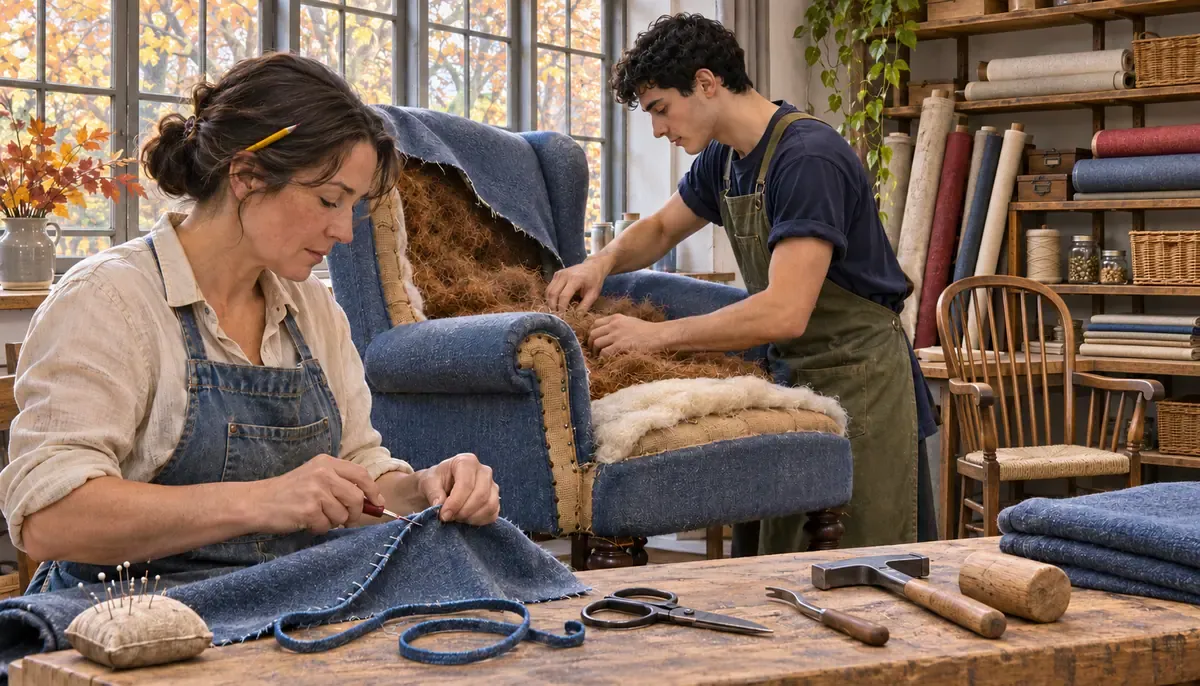
Milo rebuilt the corner while I unpicked the piping. He showed me the places he had pressed and waited. I showed him how to ease the fabric around a curve without pulling the weave crooked. For an hour, neither of us had to pretend we already knew the other’s work.
On Saturday, Mrs. Baird sat in the finished chair with a sack of flour wrapped in the blanket. She had brought it to stand in for her grandson. She shifted it from one hip to the other, then settled back.
“That’s him,” she said.
Milo laughed. I handed her the cushion we’d made from the spare blue wool. Then I sat in the chair again, after she had stood up.
This time I stayed.

Comments
Be the first to share your thoughts.