Pick a Puzzle Piece and See What It Says About You
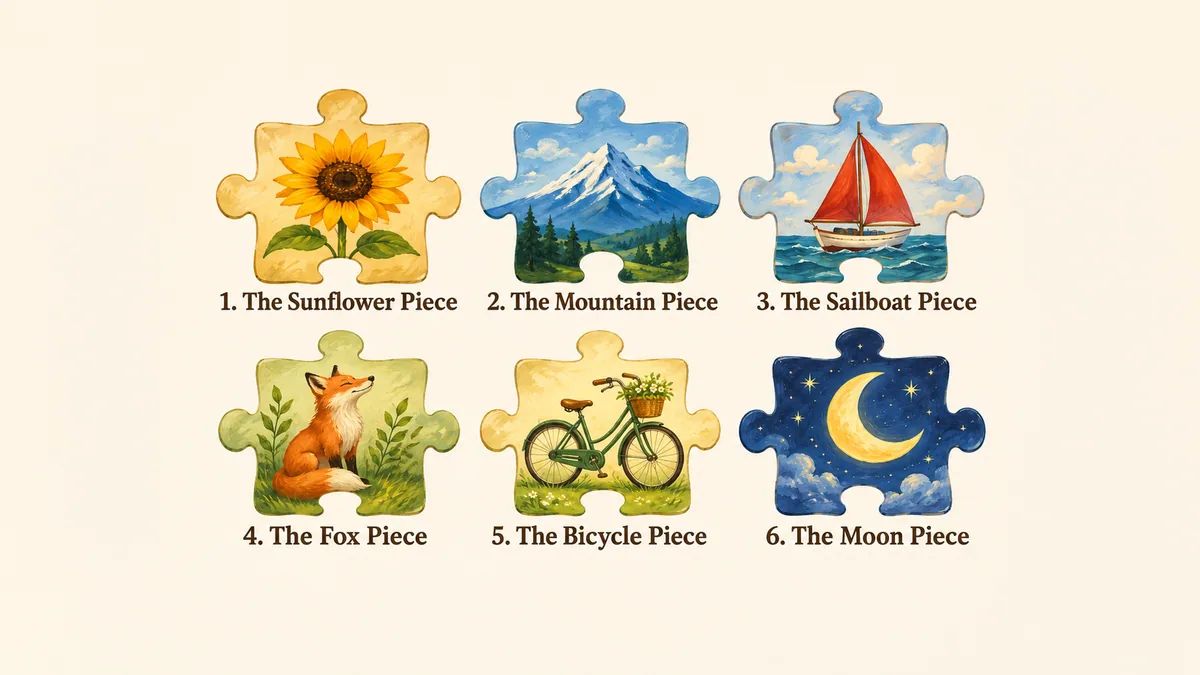
Pick one of the six numbered puzzle pieces that catches your eye first. Remember its number, then read the result that goes with your choice.
Imagine you’ve opened a box without seeing the lid. These six pieces are lying face up, and you can choose one as your starting point. The picture on the piece might matter to you, or it might be the colour or the shape. There is no trick and no best place to begin. Give yourself a moment to choose before reading further; see which everyday habit you recognize in the result.
1. The Sunflower Piece
You can often find a welcoming starting point in an unfamiliar group. You ask the person beside you where they came from or notice something you can honestly compliment. It isn’t always because you’re fearless about meeting people. You may simply know how much easier an occasion becomes after somebody makes the first ordinary remark. Your warmth gives a quiet person something they can answer without having to perform.
You might keep trying to brighten a mood that needs a little time to be difficult. A friend tells you about a disappointment, and you reach for the part that could still turn out well. Before offering that part, ask what happened next. Let them say the less cheerful bit too. You don’t lose your hopeful nature by listening to a whole unhappy story. You give your friend a comfortable place to tell it.
2. The Mountain Piece
You like being able to see where an effort is taking you. A long task becomes easier when you can name the next stage, and you are often good at helping a friend do the same. You can enjoy a slow beginning if it belongs to something you care about. People may bring you their ambitious plans because you ask a useful question about how to start rather than immediately listing the reasons they might fail.
Your eye for the next stage can draw you away from what you’ve already done. You finish a course and begin comparing the next one before you’ve put your certificate away. Give one completed thing an evening of its own. Tell somebody the part that was difficult. Use the thing you made, or take a walk without turning it into training. There will still be a next step when you get home.
3. The Sailboat Piece
You leave some space for a day to develop. If the path is closed, you may be the person who notices the smaller lane beside it. Your company can be a relief to someone who feels that every changed plan is a failure. You aren’t necessarily careless about arrangements; you simply know the point was to have an afternoon together, and you are willing to find it somewhere unexpected.
Occasionally you wait so comfortably for possibilities that somebody else has to make the first definite choice. You say either restaurant is fine when you have a real preference, or leave the date open until everyone is busy. Try naming what you’d enjoy before offering your flexibility. You can choose a direction without promising that nothing will change. Your friends may be glad to begin with one of your ideas for once.
4. The Fox Piece
You pay attention to how things fit together. You hear the small hesitation in an explanation or remember that somebody said the opposite last week. That can make you good at spotting a misunderstanding before it becomes an argument. You are often interested enough to ask a second question, and the answer to that one may be what the other person was trying to say all along.
You can sometimes keep looking for a hidden complication after the simple explanation has done its job. A short reply starts a long evening of interpretation, or you rehearse a conversation the other person has already forgotten. Ask the plain question if you need an answer. If you have one, allow it to stand for a while. Your careful attention is useful without having to work through every possible version of what somebody might have meant.
5. The Bicycle Piece
You often learn by getting a little movement into a problem. Instead of discussing the cupboard for another month, you empty one shelf and see what is there. You make beginning feel manageable for the people around you. A friend who has been putting something off may appreciate that you offer to come over for half an hour rather than insisting on a complete transformation by dinner.
The next small task can catch your eye before the current one is finished. You set down the screwdriver to answer a message and discover it beside the kettle two days later. Give yourself a modest finishing point: tools away, one message sent, one clear surface left behind. Then stop. A small job that stays finished can feel better tomorrow than three exciting starts. You don’t need to make the whole room different to have made a useful change.
6. The Moon Piece
You can be comfortable with a question that hasn’t settled yet. You give an idea a night to change shape or let someone finish speaking without filling the pause. Friends may find they tell you the thing they didn’t know how to begin, because you don’t hurry to name it for them. Your patience leaves room for a thought to arrive in its own slightly awkward words.
Sometimes that room becomes a long wait for the perfect moment to speak. You have a preference, a worry, or a kind thing to say, but keep it to yourself because it feels unfinished. Offer the first honest sentence. You can explain that you are still working it out. The other person doesn’t need a polished conclusion to understand that you want them included. You may find the next sentence together, which is its own good reason to begin.
Share your pick and tell us what drew you to that piece.
Just for fun. This quiz isn’t a psychological test.




Comments
Be the first to share your thoughts.