Choose a Desk Lamp and See What It Says About You
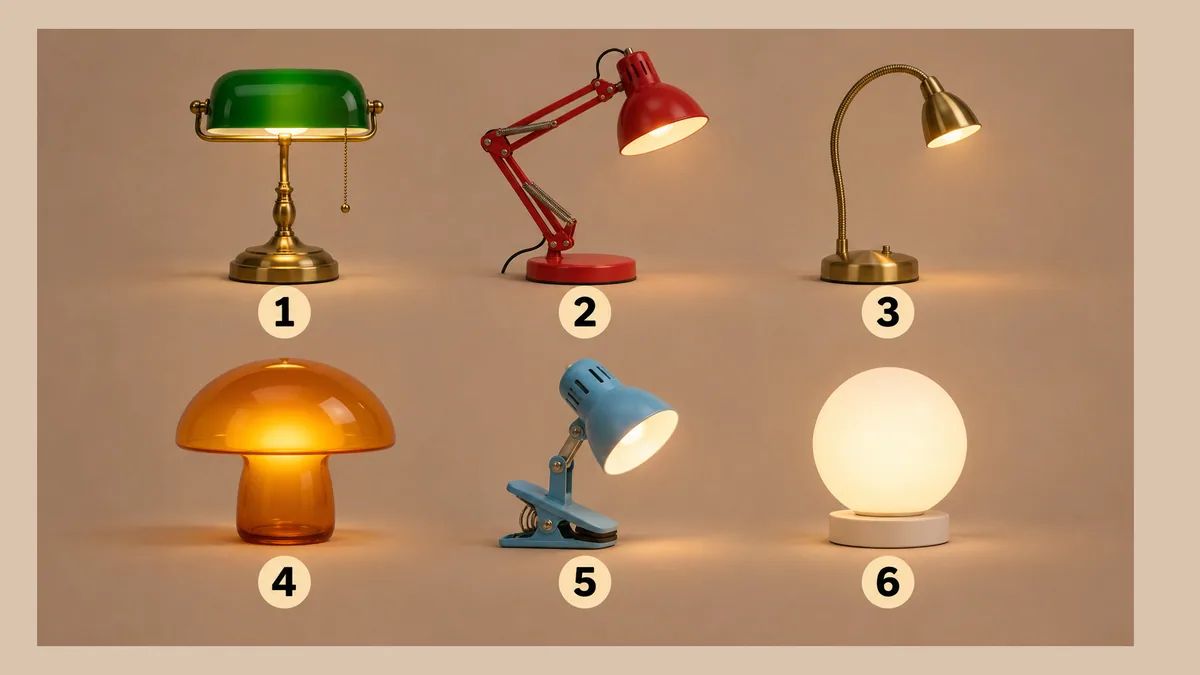
You have six numbered lamps and an empty desk. Pick the one you’d switch on when you need to get something done, then find your number.
The room has gone a little dim. You’re about to spend an hour with something that needs your attention, and you get to choose what the light on the desk looks like. See which lamp you picture reaching for and look for its number below.
1. The Green Banker’s Lamp
You settle into a job when it has a recognizable beginning. You might open a paper notebook, take the top envelope from the pile and turn the lamp on even though the room is still quite bright. Over time you’ve built a way to begin without holding a meeting with yourself. You’re especially good at doing a little work on an ordinary evening, when there’s no deadline coming up to make the decision for you.
The trouble is that a change in the room can feel like a change in the rules. If you’ve left the notebook somewhere, you may spend your whole hour without starting. See how much of your routine fits on one plain piece of paper. The lamp can come back tomorrow, and you’ll have a line to pick up from.
2. The Red Anglepoise Lamp
You get your best work done when you can move the light as the job changes. You might start reading at the table and then stand up to spread everything out where you can see what’s missing. That willingness to change the conditions halfway through helps you when the job turns out to be different from the one you sat down to do. You’re good at realizing the new plan still counts as progress.
Sometimes you change the setup because the work has reached a slow part. The papers move to another chair and the chair moves to another wall, but what you need is five quiet minutes with the sentence in front of you. Leave the angle alone through one awkward stretch. You’ll know more about what actually needs moving when you get to the end of it.
3. The Brass Gooseneck Lamp
You concentrate by narrowing the job until you can see its edges. If you’re reading through an old recipe, you might spend a whole minute on what the cook meant by a small spoon. You catch details that save you from having to do things twice. People tend to hand you a set of directions before they try using it because they know you’ll notice where a newcomer might get stuck.
Your habit is letting the smallest uncertainty keep the rest of the work off the table. A spoon is a fair question, and you might learn more from making half a batch than from another hour at the desk. Keep a note by the line you’re unsure about. It’ll be there when you have something to compare it with.
4. The Mushroom Lamp
You do well when the room makes it pleasant to stay. A low lamp and a chair you can sit in for an hour help you keep company with a task that might otherwise feel like a punishment. You can make a regular evening of sorting photos or writing a few pages. There’s value in a setup you’re willing to come back to, especially when the results take a while to show.
You can get so comfortable in the atmosphere that the task itself never quite starts. Maybe there’s a favorite record playing and you’ve listened to both sides with the notebook still closed. Give the evening one small job with a visible finish. Even putting names on three photos can turn that hour into something you’ll be glad you spent.
5. The Blue Clip-On Lamp
You’re good at seeing the use in ten minutes. You can clip a light to a shelf, write a short note while dinner’s in the oven and send it before the timer goes. Making something happen in the space already available can be a genuine skill. You rarely have to wait for the room or the afternoon to be entirely yours, which means little things stand a much better chance of getting done.
Some work needs more than ten minutes just to get back into your head. If you’ve been returning to the same long letter in scraps of time, you may keep writing a fresh first paragraph. Try giving it a longer stretch once. By the end you might have something that suits the smaller minutes, like a last line or an address.
6. The White Globe Lamp
You often need to see everything before you can decide where to start. You’ll lay out the pages of a project side by side and notice that the idea you thought belonged at the end belongs near the beginning. You’re comfortable with the stage when the connections are still loose. That helps when there’s enough to work with and nobody has yet figured out what shape it should take.
The whole room can stay lit long after you’ve spotted the part that deserves your time. You look around to see what else might relate to it and come back with twice as many pages. Turn your chair toward one sheet and see what you can get onto it. The rest of the project will look different once that page exists.
Share the number of the lamp you switched on and what you pictured doing under it.
Just for fun. This quiz isn’t a psychological test.






Comments
Be the first to share your thoughts.