The Museum Drawer That Wouldn’t Stay Empty
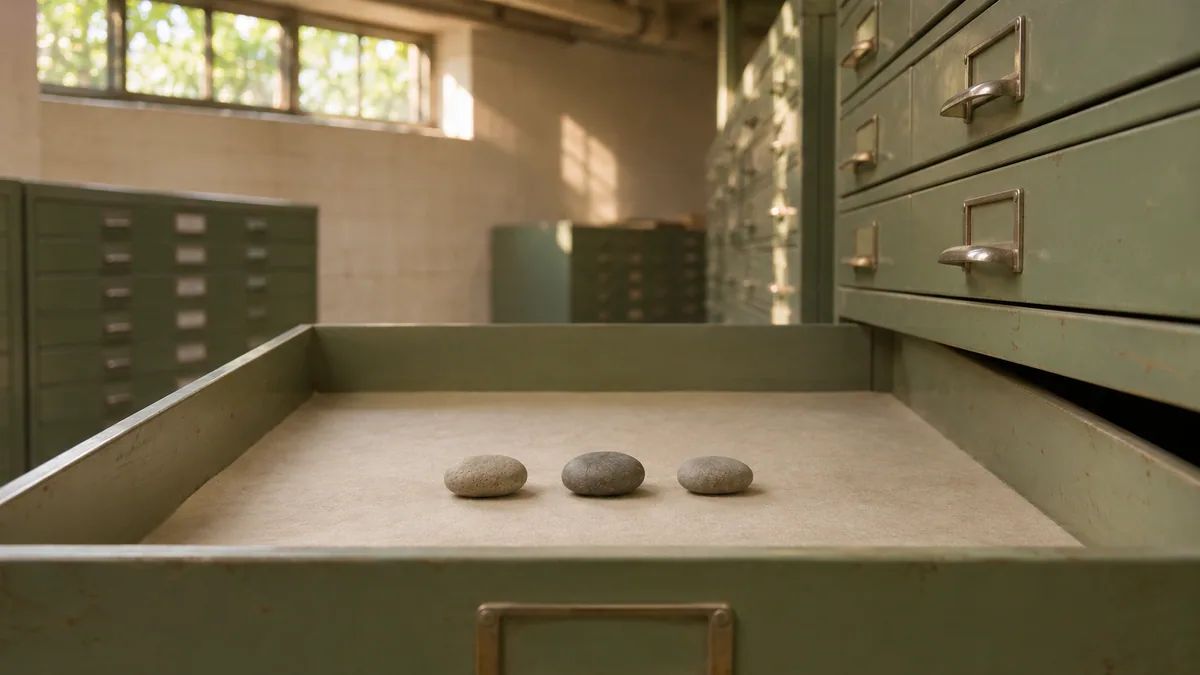
The smooth gray pebble in drawer twelve had no business being in a museum. You could find a hundred like it in the gravel outside. I knew because I had spent my lunch break looking.
I was six weeks into a job cataloguing the collections at the Rill County Museum. Most of my work took place in a basement with low pipes and green steel cabinets. The drawer inventory said twelve was empty. I took the pebble out and put it on my desk.
The next morning there were two pebbles in the drawer. The one on my desk was still there.
I’d left the cabinet unlocked because there was nothing in it anybody would steal. The one person I could think of who might play a joke on me was on holiday, and even she would have left a better joke.
I asked Vic, who cleaned the building on Tuesdays and Thursdays, whether he’d seen anyone down here. He tucked his broom under his arm and came over. Before I could tell him which drawer, he set his palm flat against twelve.
“How many?”
“Two. Three if you count the one I took out.”
He held out his hand for the first pebble. There was a little dimple in its side, just deep enough to catch a thumbnail. I had been rubbing it all morning without noticing.
Vic set that pebble with the other two. He moved them apart until there was a finger’s width between each, then asked if he could borrow my desk lamp. I carried it over and balanced it on the cabinet.
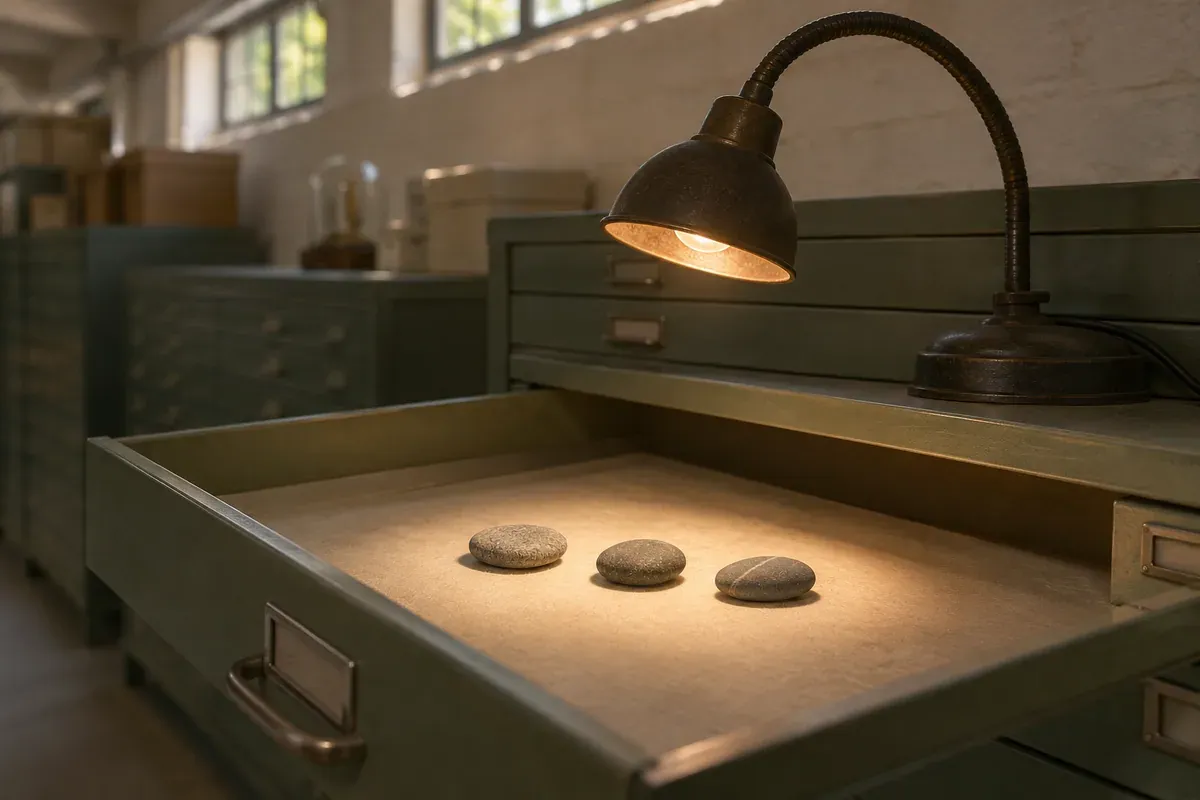
Under the light, the three stones looked as ordinary as ever. Vic bent until he was nearly level with the drawer. I thought he was going to tell me to look for scratches, or numbers painted on the bottoms. Instead, he closed his eyes and put both hands into the drawer.
“Whoever’s doing this,” he said, “has got as far as the bridge.”
Vic had grown up two streets from the museum. On Saturdays his mother staffed the admissions desk, and when nobody came in he played in the gravel by the back step. One summer a teacher started bringing a class from the county school for blind children. There was a plaster model of the river valley upstairs, with miniature bridges and a waterfall painted the blue of dish soap.
“The sign said you couldn’t touch it,” Vic said. “Mum asked what the children were supposed to do with that information.”
His mother filled three drawers in a spare cabinet with stones, sticks and broken bits of brick. The children laid out a walk through town from things she let them handle. Smooth pebbles meant the river. The dimpled one was the deeper crossing. Set three the right distance apart and two fingers could walk between them to the bridge.
“What happened to the drawers?”
“New director. Needed somewhere for the insect collection. Mum took the stones home in the pockets of her coat.”
We looked at the drawer. I asked Vic if he thought one of the children had come back. He said he thought we should go upstairs before the lunch shift ended.
At the admissions desk, a woman in a yellow cardigan was counting the till. Her name was Ellen. I had passed her every day for six weeks. Once she had asked me how many drawers were empty downstairs and I’d told her I was getting through them as fast as I could.
Vic put the dimpled stone beside the coins. Ellen laid a finger on it. She left the till open and asked whether we could talk somewhere her supervisor wouldn’t see it.
“I had permission to bring the Saturday group through,” she told us in the staff room. “I was one of the kids the first time around. I wanted to work out the old route before I showed anybody. I was doing it from memory on my break.”
She had been looking for the right stones on the river path. Some of the children she’d be bringing in had already walked that path with her. One used a cane and had wanted to know where the footbridge used to be. The valley model still hung on the wall upstairs. They still couldn’t touch it.
“I’ll bring a tray,” she said. “I can keep the stones in my bag until Saturday.”
I thought of my spreadsheet. It had columns for an object’s donor, condition and location. All three pebbles had fit in my hand. I could have listed them before the kettle came to a boil. The problem was that my inventory had no way to say what the drawer was for.
We pulled out a shallow wooden tray from the staff cupboard. Ellen spread the three pebbles on the tray, then used the edge of a broken red brick to show me where the road turned uphill. I could follow it with my eyes shut as long as I kept one finger on the brick.
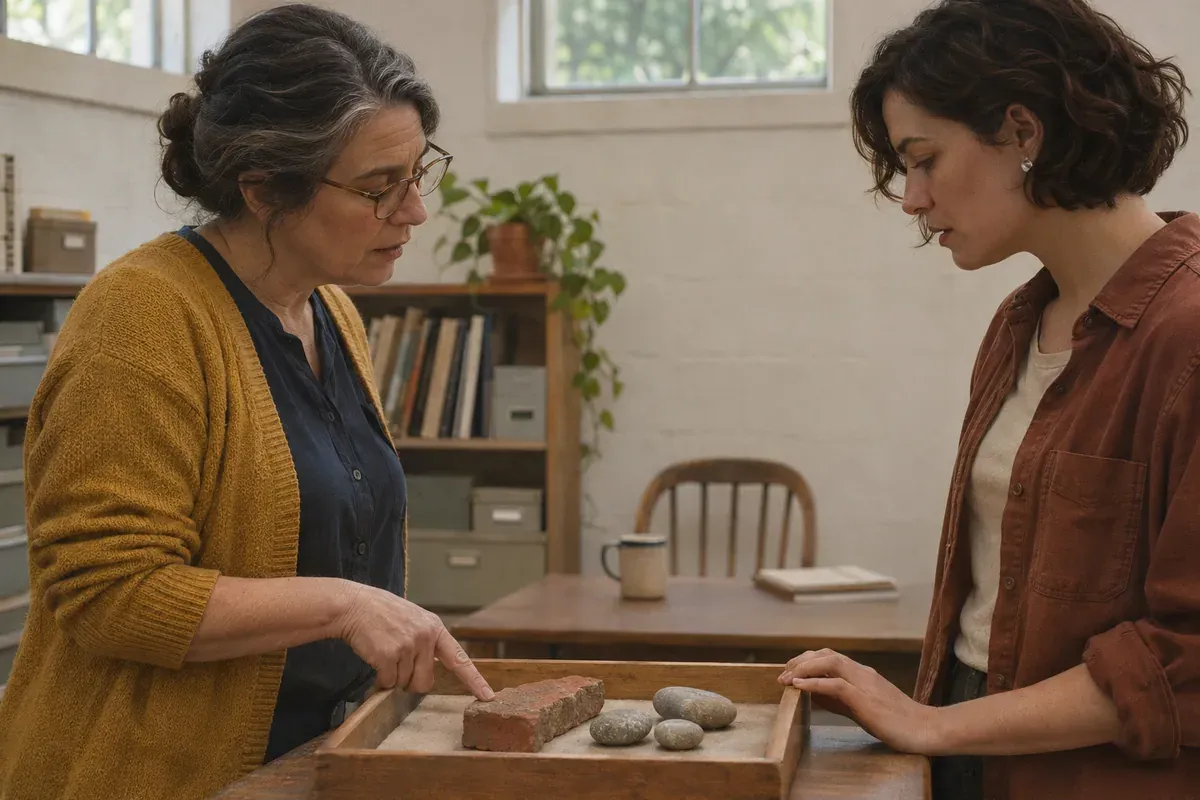
On Saturday, I carried the tray upstairs. A girl asked if the bridge had been made of wood or metal. Vic told her to feel the little square of wood he’d brought in his pocket. She asked if she could move it. Ellen slid the tray closer.
“See if you can find a better place to cross,” she said.
Comments
Be the first to share your thoughts.