The Atlas Had a Trapdoor Under the Ocean
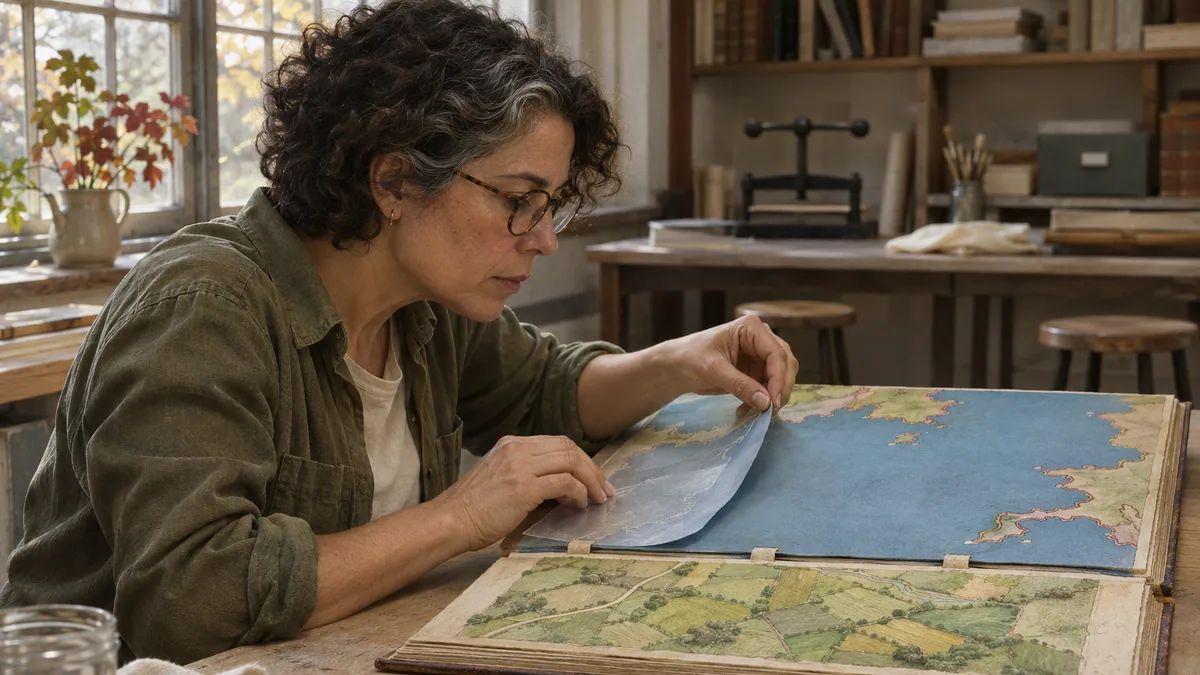
The ocean in the atlas lifted at one corner. I put a strip of clear film under it to see how far the paste had failed, and the whole North Atlantic swung up on a cloth hinge.
“Careful,” said the man at the end of my workbench. “It hasn’t done that in forty years.”
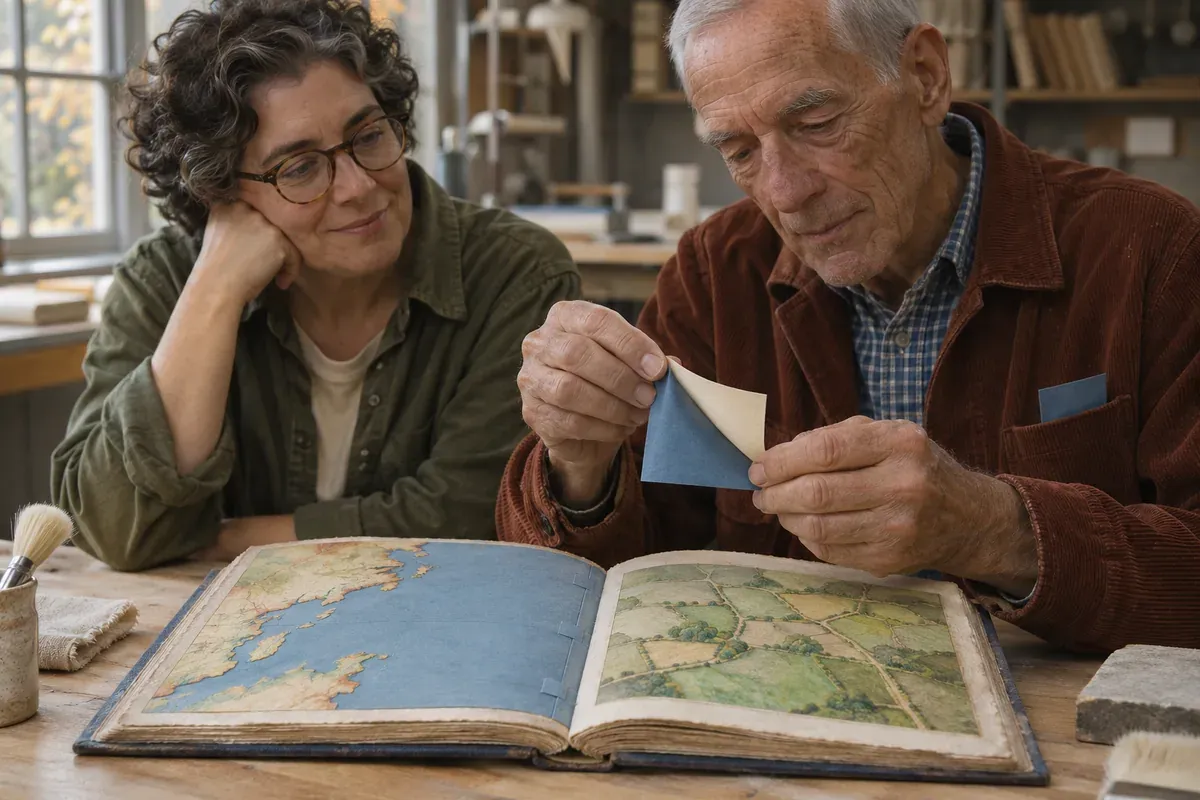
He’d introduced himself as Emmett, a retired compositor from Low Bank, where the flood maps used to be printed. He had brought the atlas in wrapped in a clean pillowcase, with a square of blue paper tucked into his shirt pocket.
I was the book conservator at the county bindery. Visitors usually asked how long a repair would take or whether they could get a price before I cleaned anything. Emmett had asked me to set a second stool at the bench.
“You’re welcome to sit,” I said.
“That’s for whoever knows what to do next.”
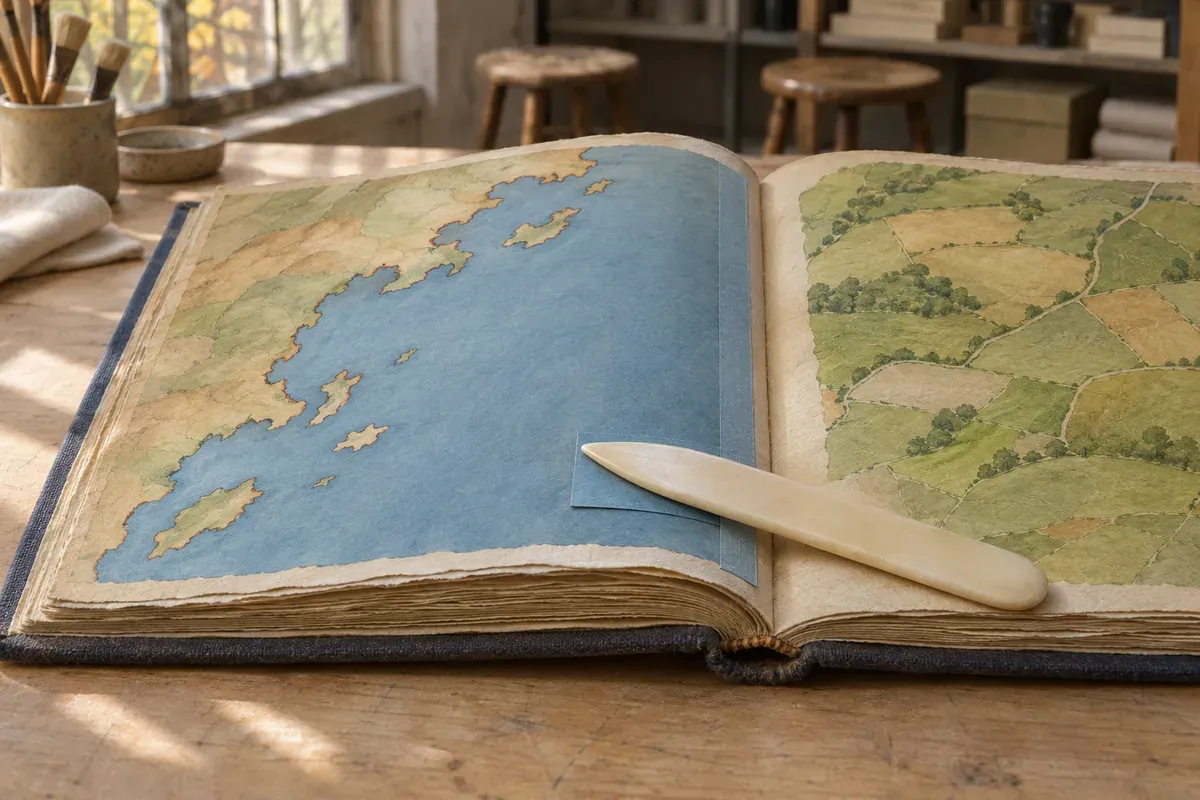
Under the paper ocean was another sheet of blue, paler than the first. I lowered the lid and slid my small bone folder into the spine to hold the book open. The illustration on the other page showed the fields west of Low Bank. Whoever drew them had bothered to put in the little triangular paddock behind the mill.
“My dad kept sheep in that triangle,” I said.
“Does he still?”
“He sold up when I was thirteen. I was sure the sheep would find their way back. I used to check the gate.”
Emmett looked at the paddock for a while. Then he took the blue square out of his pocket and held it over the atlas. It matched the paper under the ocean, down to the little threads caught in the pulp.
“Before you lift the other flap,” he said, “tell me if you’d recognize your father’s handwriting.”
My father printed in capitals on everything he meant to last. On anything meant just for me, the dots over his i’s were short slashes. I couldn’t have told Emmett why I knew that. I could picture it on a note letting me stay up to hear a storm.
I lifted the second flap. There was a tiny drawing of a gate and, underneath, Lina, try the lane by the ash tree. Each i had a little slash.
“I made the map,” said Emmett. “He made the doors.”
I lowered my wrists to the bench. For a while all I could hear was the dehumidifier clicking on and off.
“He paid you?”
“I owed him. He used to let me set my own practice type in the evenings. I was the slowest apprentice at the press. When the foreman timed us I’d forget where every letter lived.”
The atlas had been for the two of us, my father and me. The auctioneer was coming for the sheep on a Friday. My father had asked Emmett to show him how to build a book with places we could go looking, even after the field belonged to somebody else.
“Why didn’t he give it to me?”
“He was going to. I told him I’d finish the last page that week. Then I got offered a proper job in the city and I left on Thursday. I put the book in a box with some things I meant to come back for.”
Emmett sat on the second stool. The blue square was still between his fingers. He turned it over. On the white side were four faint pencil ticks where it was meant to fold.
I asked what was supposed to go under the last flap.
“He’d marked a place at the edge of the field. That part was yours. You were going to draw whatever you found there.”
I knew the spot. There had been a bent nail in the top of the gatepost at exactly my nose height. I used to hang my school cap there so the sheep wouldn’t eat the brim.
Emmett held the blue flap in place while I slid a scrap of release paper under its edge. I showed him how little paste to load on the brush. When I had the hinge lined up, he laid the bone folder across it to keep it still.
I rang my father that evening. He wanted to know whether Emmett still left his tea until it was stone cold. I said I hadn’t offered him any. My father told me to offer him two cups. He’d drink the second one in time.
The gatepost went on the last page in pencil, with the nail sticking out to the left. I was halfway through drawing the cap when I rang him again to ask which side it should hang on.
“Put it where you left it,” he said.
Comments
Be the first to share your thoughts.